
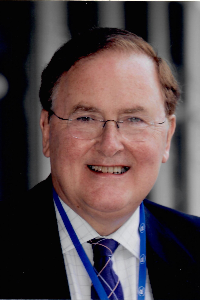
Dr. Martin Conrad Carey, MD, DSc, LLD, a physician-scientist whose discoveries transformed the understanding of digestive disease, a revered Harvard Medical School professor, and a devoted husband, father, grandfather, mentor, and friend, passed away peacefully on July 8, 2026, at the age of 87.
Born on June 18, 1939, in Clonmel, County Tipperary, Ireland, Martin was the son of John ("Jack") Carey and Alice Carey. Raised in a family that valued education, hard work, humility, and faith, he developed an insatiable curiosity that would shape every stage of his life. Although his career would take him across the world, Ireland remained central to his identity, and the values he learned there guided him throughout his life.
Martin graduated with First Class Honours in Medicine from University College Dublin in 1962, earning the degrees of MB, BCh, BAO. He later received the Doctor of Medicine (MD) degree from the National University of Ireland in 1981 and, just three years later, the Doctor of Science (DSc), one of the University's highest academic distinctions, in recognition of his original scientific contributions. His achievements were further recognized with an Honorary Master of Arts from Harvard University, an Honorary Doctor of Laws (LLD) from the National University of Ireland, and an Honorary Doctor of Science from University College Dublin.
After training in Dublin, Martin moved to Boston, where he began his academic career at Boston University before being recruited as one of the founding faculty members of the Division of Gastroenterology at Brigham and Women's Hospital. He rose to become Professor of Medicine at Harvard Medical School and the Lawrence J. Henderson Professor in the Harvard–MIT Division of Health Sciences and Technology, where he served for many years as director of the gastrointestinal pathophysiology course, inspiring generations of medical and graduate students.
Martin's scientific career spanned more than five decades and exemplified the very best of academic medicine. Combining medicine, physical chemistry, and physiology, his pioneering investigations into bile lipid physical chemistry, cholesterol gallstone disease, dietary fat digestion, and intestinal absorption fundamentally reshaped our understanding of digestive health and disease. His laboratory established the scientific foundation for modern concepts of cholesterol gallstone formation and made important contributions to understanding the genetic basis of gallstone disease, including the Lith gene. Earlier in his career, his research also helped establish the importance of folic acid in preventing neural tube defects, improving maternal and infant health around the world.
He authored approximately 146 original scientific papers, more than 130 invited review articles, numerous textbook chapters, and delivered hundreds of invited lectures throughout North America, Europe, Asia, and Australia. His work appeared in many of the world's leading scientific journals, including Science, The New England Journal of Medicine, Journal of Clinical Investigation, Gastroenterology, and Hepatology. His discoveries continue to influence both scientific investigation and the care of patients around the world.
For all that Martin accomplished in research, those closest to him often regarded his greatest legacy as the people he trained. Over the course of his career, he mentored more than sixty scientists and physician-scientists, nineteen of whom became full professors of medicine at leading universities throughout the United States, Europe, and Asia. He believed deeply that knowledge was meant to be shared and found immense satisfaction in helping young investigators develop into independent scientists and compassionate physicians. His laboratory was known not only for scientific excellence, but also for generosity, collegiality, and intellectual rigor.
Martin's contributions to medicine were recognized by many of the profession's highest honors, including Distinguished Scientific Awards from both the American Association for the Study of Liver Diseases and the American Gastroenterological Association, as well as the Alfred Windaus Award from the Falk Foundation and numerous other national and international distinctions. Yet accolades never defined him. He remained, above all, a thoughtful teacher, a generous colleague, and a humble man whose greatest satisfaction came from discovery itself and from seeing others succeed.
To family and friends, however, Martin was much more than an accomplished physician and scientist. He was a gifted storyteller with a dry Irish sense of humor, a lifelong lover of books, history, music, and thoughtful conversation. Possessing the curiosity of a true Renaissance man, his interests extended far beyond medicine. He found joy in the arts, performing with Boston's St. Botolph Club Players, and spent decades pursuing scholarly research on the Irish composer John Field and the pioneering scientist Agnes Pockels. Learning was never simply his profession—it was his way of life.
Above all, Martin treasured his family. To his grandchildren, he was simply Grandad Martin, and no title or honor ever meant more to him.
He is survived by his beloved wife, Mei Xu; his son Julian and Julian's partner, Diana Maichin; his son Dermot and wife, Amanda; and his cherished grandchildren, Desmond, Emmett, and Lois. He is also survived by his siblings, John, Michael, and Bernadette Hanahoe. He was predeceased by his parents, John ("Jack") and Alice, and by his siblings, Patrick ("Paudge") and Calista Devine.
Family and friends are invited to celebrate Martin's remarkable life. Visiting hours will be held on Wednesday, July 15, from 4:00 to 7:00 p.m. at the George F. Doherty & Sons Funeral Home, 477 Washington Street, Wellesley, Massachusetts. A Funeral Mass will be celebrated on Thursday, July 16, at 11:00 a.m. at St. Paul's Church, Wellesley, Massachusetts. Interment will take place in the Carey family plot in Clonmel, County Tipperary, Ireland.
Martin's life demonstrated that intellectual curiosity and kindness are not separate virtues but inseparable companions. He changed the course of medicine through discovery, shaped generations of physicians through teaching, and enriched the lives of family and friends through his generosity, humility, and wit. His legacy endures in the science he advanced, the students he inspired, and the love he shared so freely.
Ar dheis Dé go raibh a anam.
May his soul rest at the right hand of God.